Capability Funding & Delivery — Part 4
As Australia’s defence innovation ecosystem matures, governance expectations are rising.
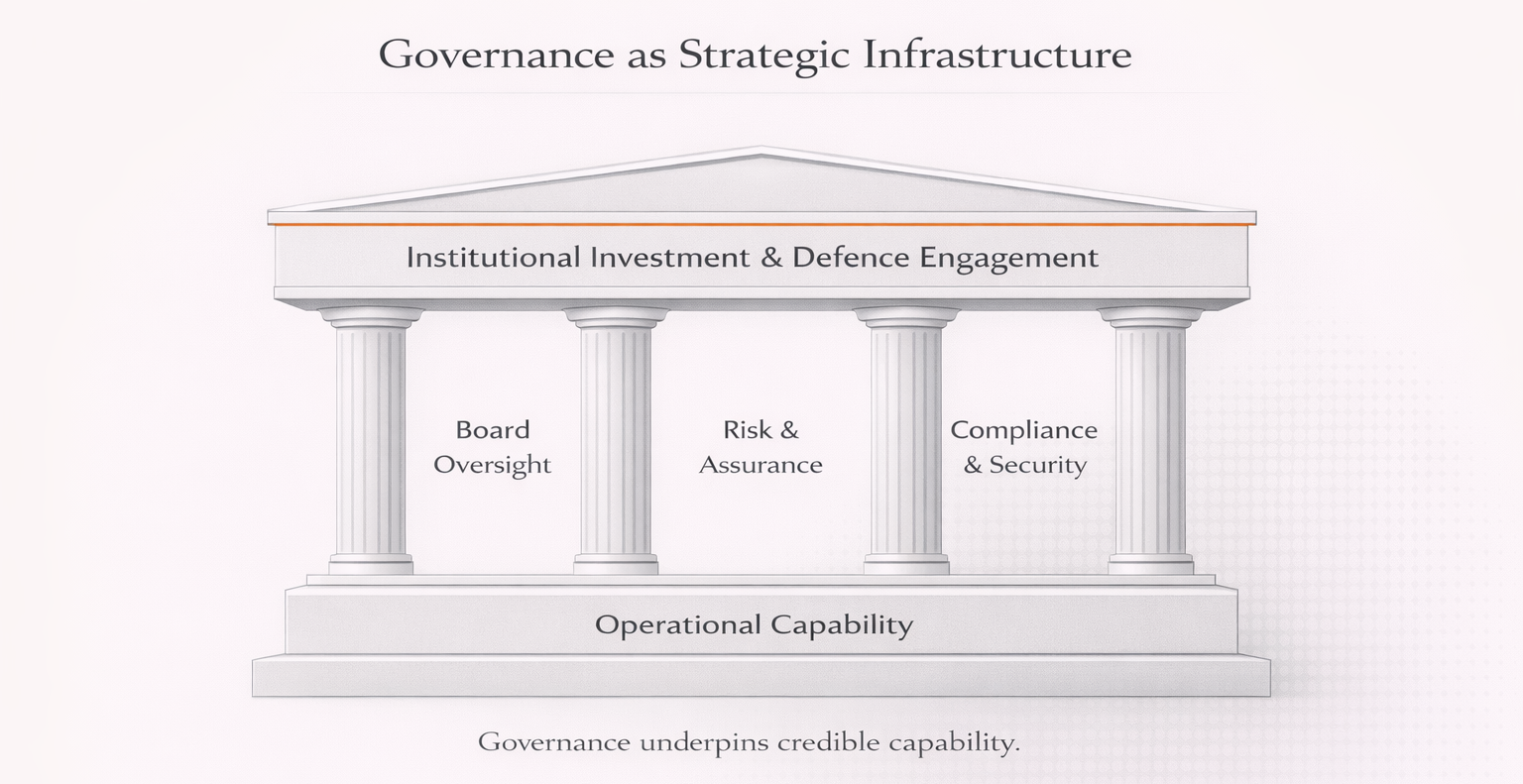
Whether funding originates through grants, co-investment mechanisms, or private capital, organisations operating in Defence and dual-use domains are increasingly assessed not only on technical capability — but on governance maturity.
Governance is no longer an administrative function. It is a strategic requirement.
Why Governance Matters in Defence Investment
As Australia’s defence innovation ecosystem matures, governance expectations are rising.
As Australia’s defence innovation ecosystem matures, governance expectations are rising.
- Align governance frameworks with Defence and regulatory expectations
- Integrate risk management into capability development
- Prepare for institutional engagement
- Translate innovation into structured, supportable delivery
As Australia’s defence innovation ecosystem matures, governance expectations are rising.
As Australia’s defence innovation ecosystem matures, governance expectations are rising.
The Shift from Founder-Led to Institution-Ready
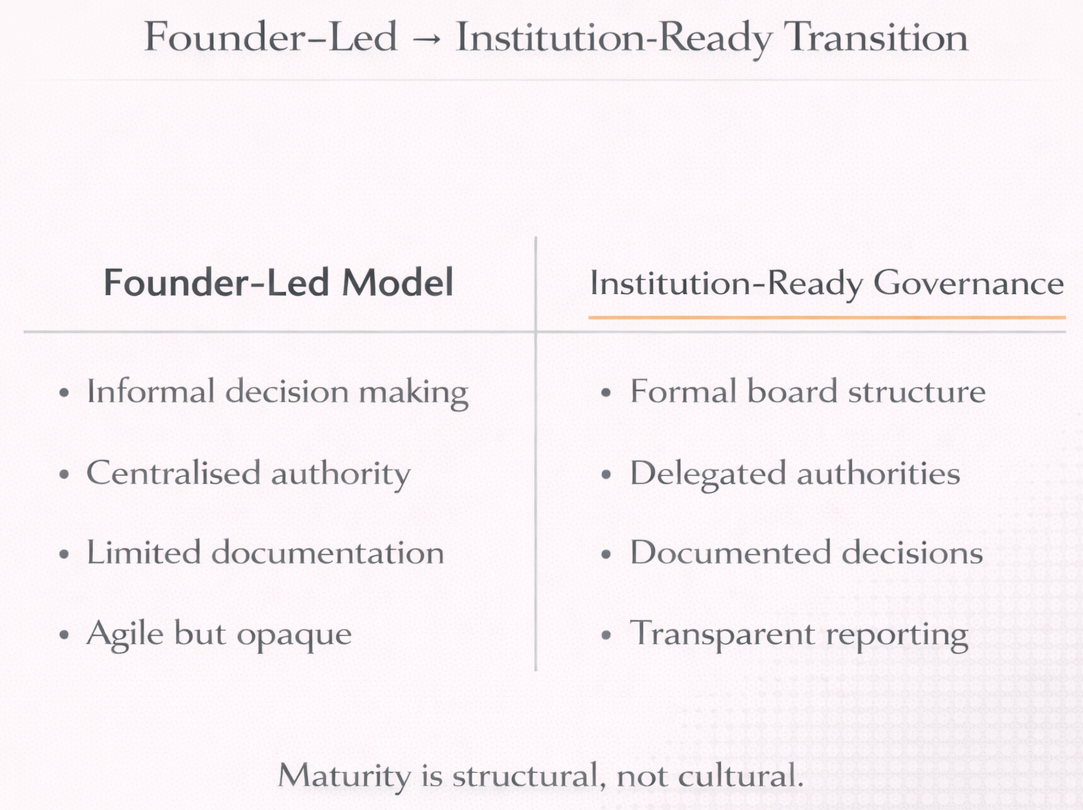
Many early-stage companies begin with founder-led decision making.
As capital scales, expectations change.
Institutional capital — whether government-aligned or private — will expect:
- Formal board structures
- Clear delegation authorities
- Documented decision processes
- Financial reporting discipline
- Conflict-of-interest management
Transitioning from entrepreneurial agility to structured oversight is a critical inflection point.
Risk and Assurance Frameworks
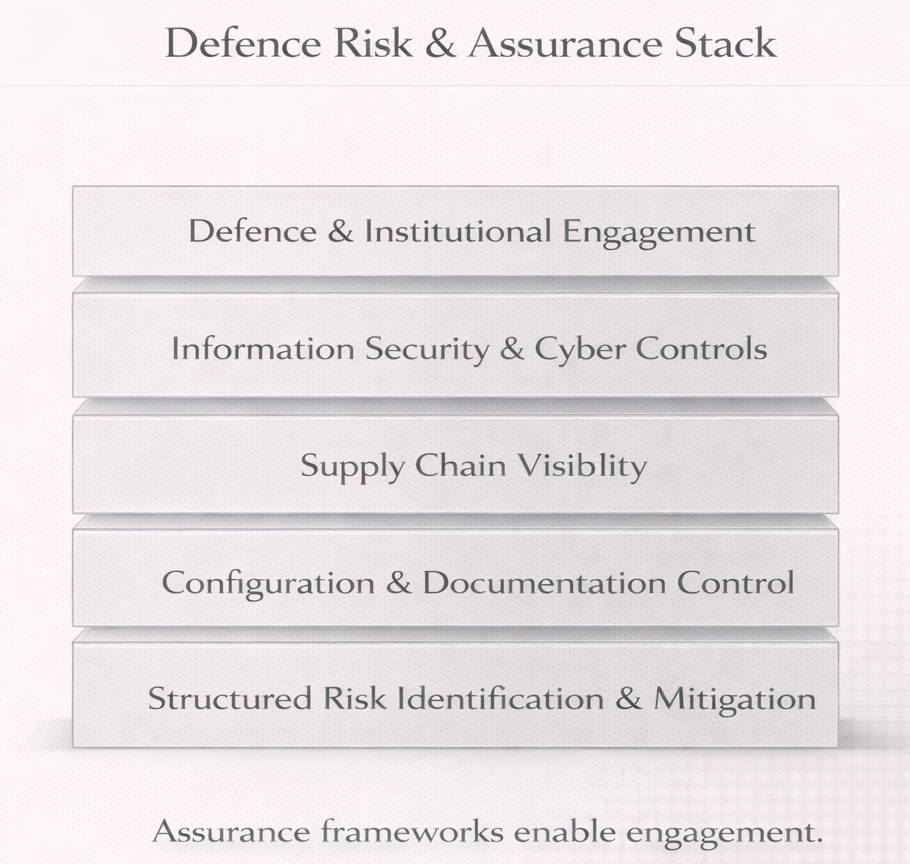
In Defence-aligned environments, risk management must be deliberate and documented.
This includes:
- Structured risk identification and mitigation
- Configuration control and documentation discipline
- Supply chain visibility
- Cyber and information security compliance
- ESG and modern slavery reporting obligations
Frameworks aligned to recognised standards (such as ISO-based approaches) demonstrate maturity and seriousness.
Governance reduces friction in investment and procurement alike.
National Interest and Dual-Use Considerations
Dual-use capability introduces additional governance complexity.
Investors and stakeholders will assess:
- Export pathway alignment with trusted partners
- Intellectual property controls
- Foreign ownership and influence considerations
- Compliance with sanctions and counter-terrorism financing laws
- Protective security frameworks

Governance must extend beyond commercial concerns to national interest alignment.
Governance as Competitive Advantage
Well-structured governance does not slow growth.

It enables.
- Faster due diligence
- Reduced regulatory friction
- Improved investor confidence
- Clearer engagement with Defence stakeholders
- More credible export positioning
In emerging Defence technology markets, governance is a differentiator.
Practical Steps for Organisations
Organisations preparing for grant, co-investment, or private capital engagement should consider:
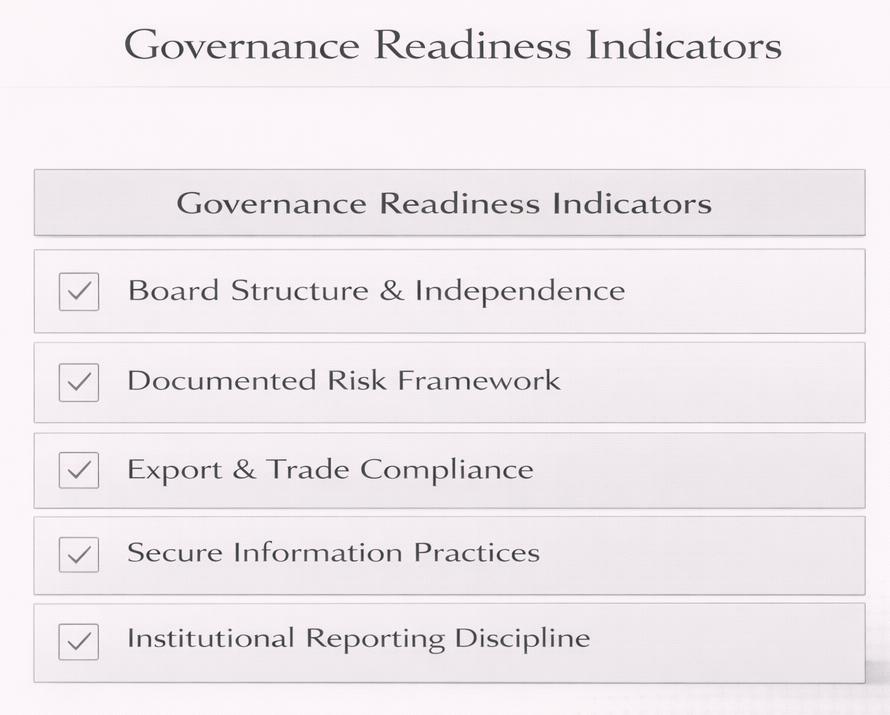
- Formalising board composition and advisory structures
- Documenting risk and compliance frameworks
- Reviewing export control and trade compliance readiness
- Establishing secure information management practices
- Aligning reporting structures to institutional expectations
Governance maturity signals operational seriousness.
ARIA Perspective
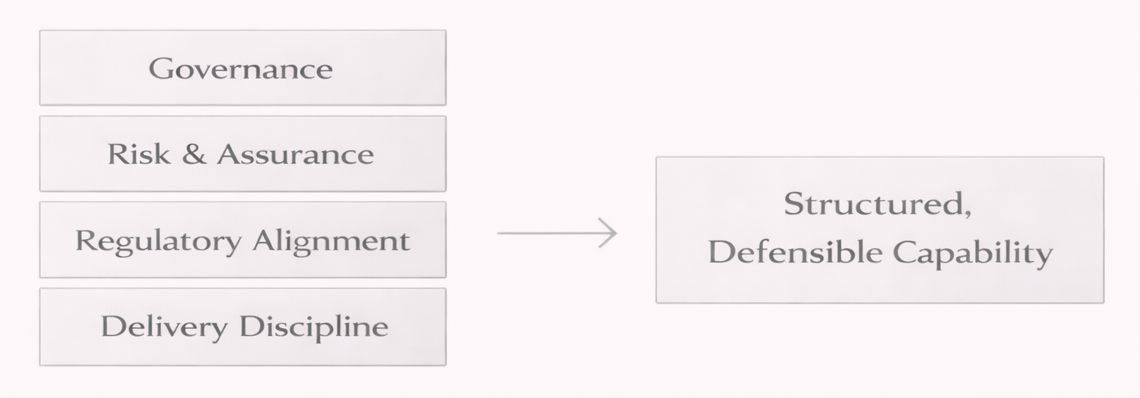
ARIA operates in complex, regulated, and high-consequence environments where governance, assurance, and delivery discipline are fundamental.
We support organisations to:
- Align governance frameworks with Defence and regulatory expectations
- Integrate risk management into capability development
- Prepare for institutional engagement
- Translate innovation into structured, supportable delivery
In Defence-aligned environments, governance is not peripheral. It is foundational.

Disclaimer
This article provides general information only and does not constitute legal, financial, or investment advice. Organisations should seek independent advice relevant to their specific circumstances.
Leave a Reply