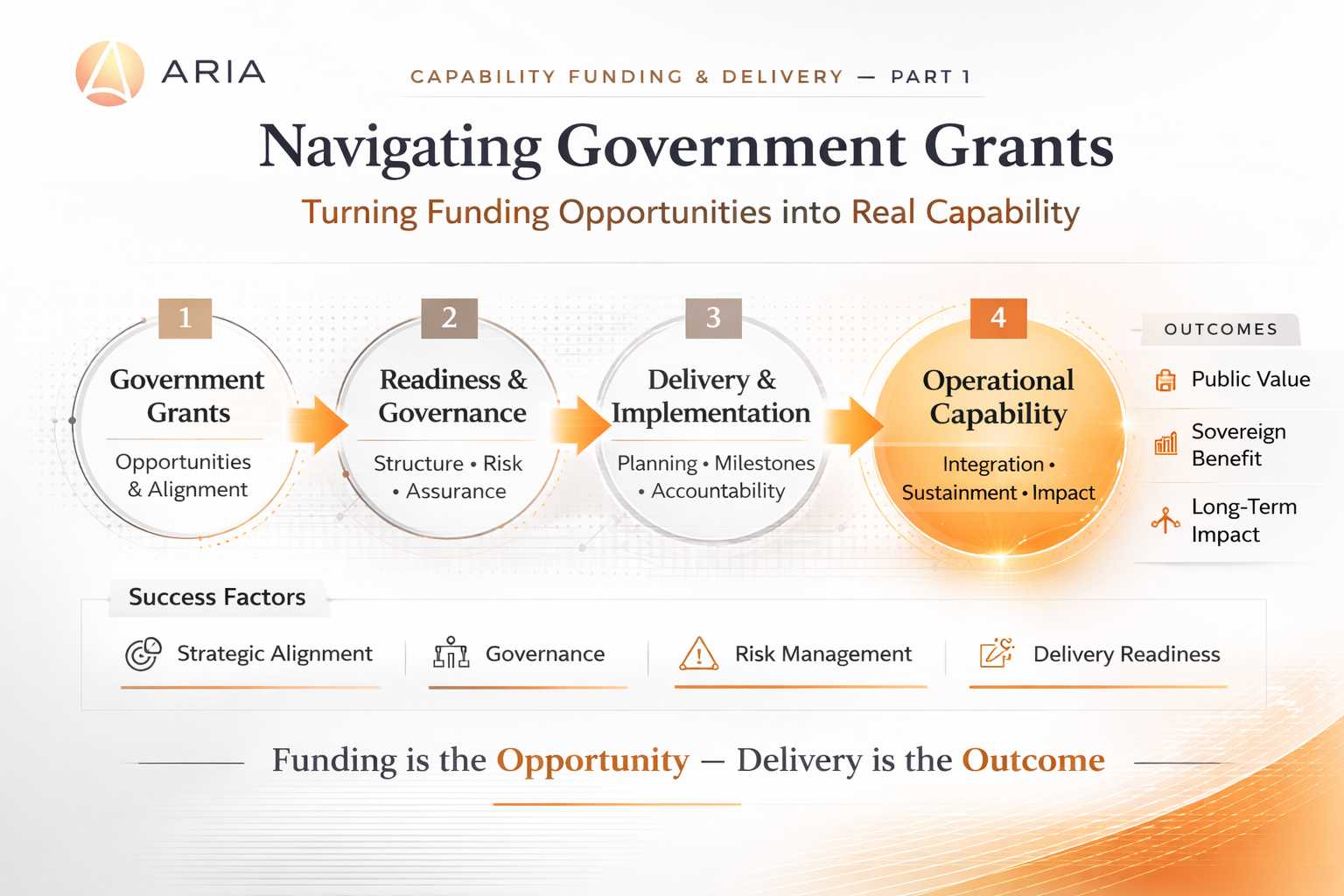
Capability Funding & Delivery — Part 1
Government grant programs can provide meaningful support for innovation, research translation, and capability development. Yet many promising organisations struggle not with eligibility, but with alignment, framing, and delivery readiness.
Understanding how grants work — and how to prepare for them — is often the difference between funding success and repeated disappointment.
Where to Start: grants.gov.au
In Australia, the central portal for Commonwealth Government grant opportunities is:

The site provides visibility of:
- Open grant opportunities
- Forecast grant programs
- Guidelines and eligibility requirements
- Key dates and application documentation
For organisations working in Defence, innovation, infrastructure, research, or capability development, the portal is an essential reference point.
However, identifying a grant opportunity is only the first step.
Funding Does Not Equal Readiness
Many applications fail because:
- The project is not clearly aligned to program objectives
- The capability need is poorly articulated
- Governance and delivery structures are unclear
- Risk and assurance considerations are underdeveloped
- The organisation cannot demonstrate delivery maturity
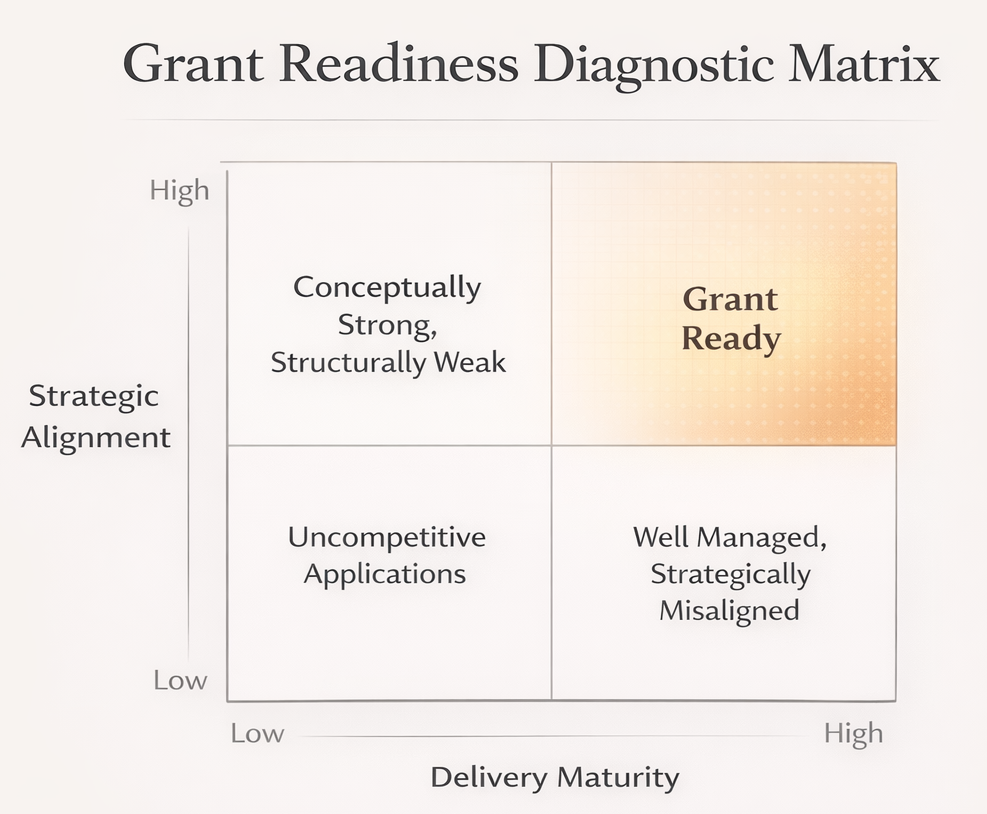
Grant assessors are not only evaluating ideas — they are evaluating credibility, structure, and likelihood of successful execution.
Common Grant Pathways Relevant to Capability and Innovation
Depending on sector and maturity, organisations may explore:
- Innovation and commercialisation grants
- Research translation and university partnership programs
- Industry capability uplift programs
- Defence-related innovation pathways
- National reconstruction and manufacturing initiatives
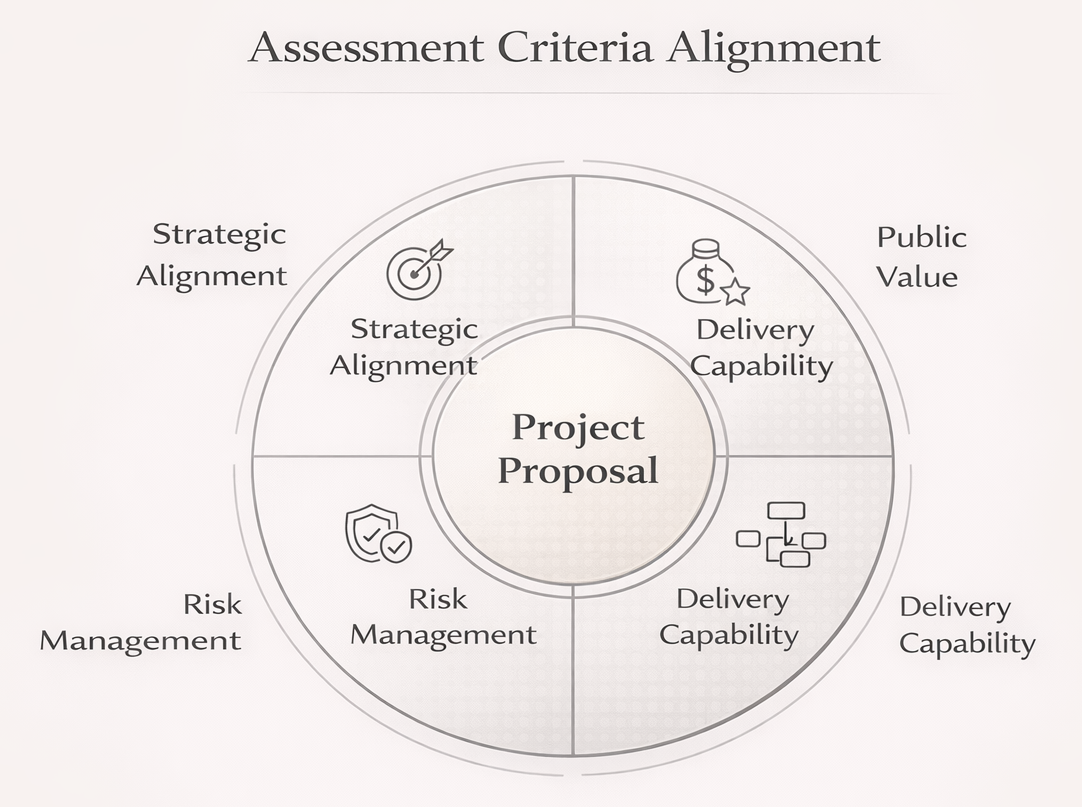
Each program has its own assessment framework, but most evaluate similar core elements:
- Strategic alignment
- Value for public investment
- Delivery capability
- Risk management
- Outcomes and measurable impact
Key Funding Pathways to Monitor
In addition to opportunities listed on grants.gov.au, organisations operating in Defence, advanced manufacturing, research, and critical infrastructure may monitor programs such as:
National Reconstruction Fund Corporation (NRFC)
The NRFC supports investment across priority sectors including defence capability, advanced manufacturing, transport, renewables, and value-add industries. While structured differently from traditional grants, it represents a significant source of capital aligned with sovereign capability development.

Defence Innovation Pathways
Organisations developing technology relevant to Defence capability may consider monitoring Defence innovation initiatives, capability challenge programs, and industry engagement pathways. These programs typically prioritise operational relevance, integration feasibility, and delivery maturity.
State-Based Industry and Innovation Grants
State governments often provide advanced manufacturing grants, research translation funding, industry capability uplift programs, and regional development funding that may complement Commonwealth programs.
Framing Matters
Grant applications are strongest when they clearly demonstrate:
- A defined operational or market problem
- Evidence supporting the proposed solution
- Structured delivery planning
- Governance and oversight arrangements
- Practical implementation pathways
Applications that focus only on the technical merits of a solution often underperform.
Early Preparation Improves Outcomes
Organisations considering grant opportunities should consider:
- Aligning projects with broader government priorities
- Establishing internal governance before submission
- Defining measurable outcomes early
- Identifying risks and mitigation strategies
- Clarifying ownership and accountability
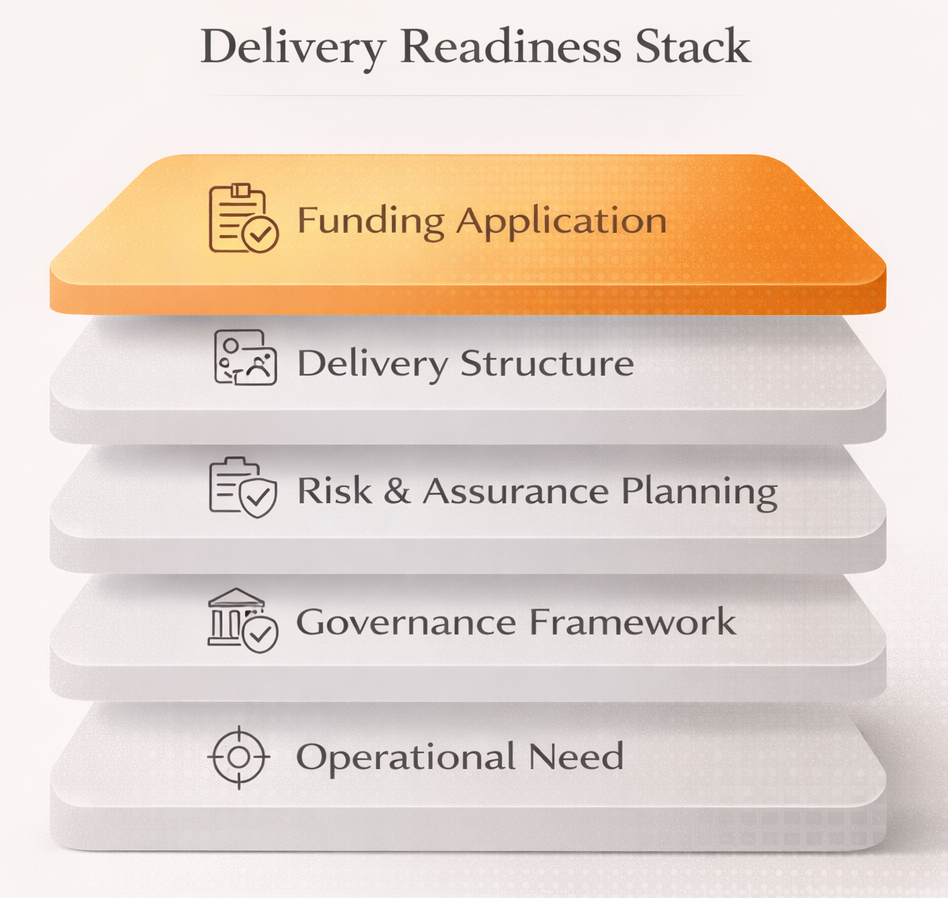
Preparation before a grant opens is often more important than the writing phase itself.
Grants as Enablers, Not Endpoints
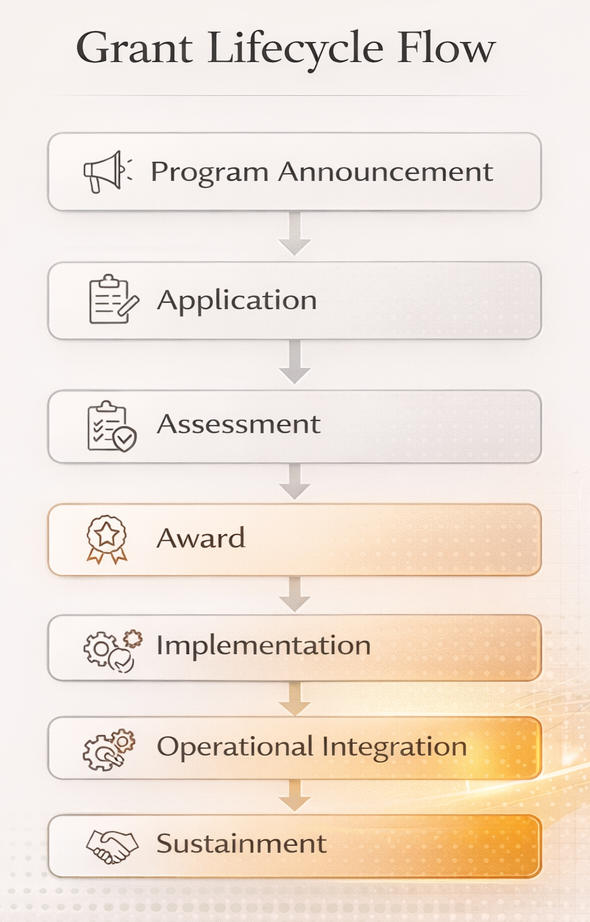
Funding should be viewed as a mechanism to accelerate capability — not as the objective itself.
Successful grant-supported projects typically demonstrate:
- Clear transition from funded activity to operational use
- Integration with existing systems and processes
- Long-term sustainment planning
- Stakeholder engagement from the outset
This is particularly important in regulated or high-consequence environments.
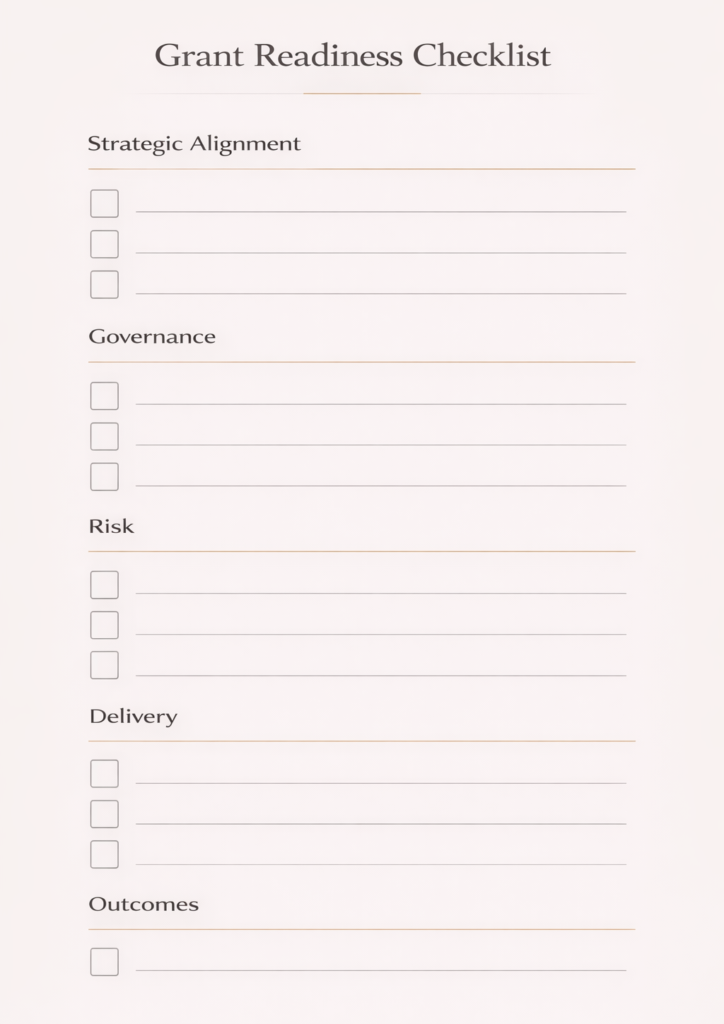
Grant Readiness Checklist
Organisations preparing funding applications may find the following structured checklist useful prior to submission.
Current Opportunity Spotlight: NSW ETCF 2026
ARIA is actively supporting organisations pursuing the Emerging Technology Commercialisation Fund.
👉 Read our detailed ETCF 2026 guide
Where ARIA Fits
ARIA supports organisations navigating complex delivery and capability environments. While ARIA does not provide procurement advice, we assist clients in strengthening:
- Delivery frameworks
- Governance structures
- Risk and assurance planning
- Capability articulation
- Operational alignment
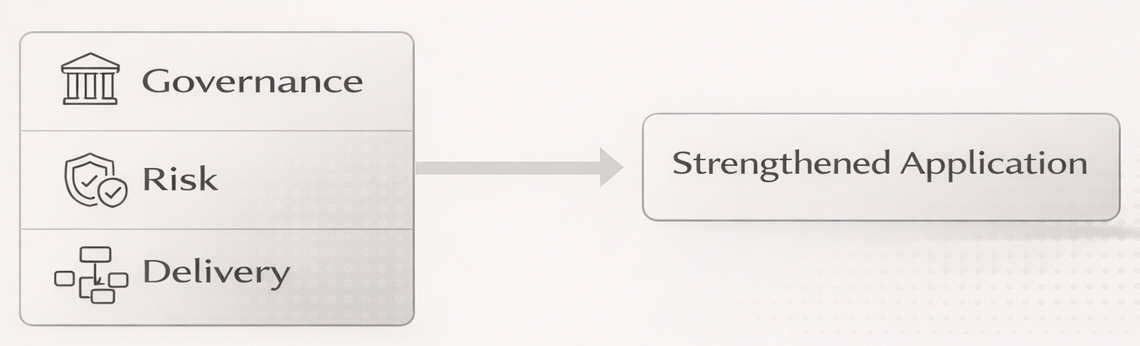
This foundation often improves the quality and defensibility of funding applications.
About ARIA
ARIA Project Management Solutions operates at the intersection of government, Defence, industry, and emerging technology. We support organisations translating ideas into deployable, supportable capability.
This article forms part of ARIA’s “Capability Funding & Delivery” Insights series, focused on strengthening delivery readiness in regulated and high-consequence environments.

Leave a Reply