Unlocking Funding for Real-World Capability
Australia’s Cooperative Research Centres Projects (CRC-P) Grants are one of the most powerful — and underutilised — funding mechanisms for organisations seeking to turn innovation into deployable, commercial capability.
For organisations focused on delivering sovereign capability, CRC-P provides a structured pathway to translate innovation into operational outcomes.
Unlike traditional research grants, CRC-P is designed to support:
- Industry-led innovation
- Short-term, outcome-focused projects
- Collaboration between industry and research organisations
- Clear pathways to commercialisation and adoption
For organisations operating across Defence, advanced manufacturing, energy, infrastructure, and emerging technologies, CRC-P represents a critical bridge between:
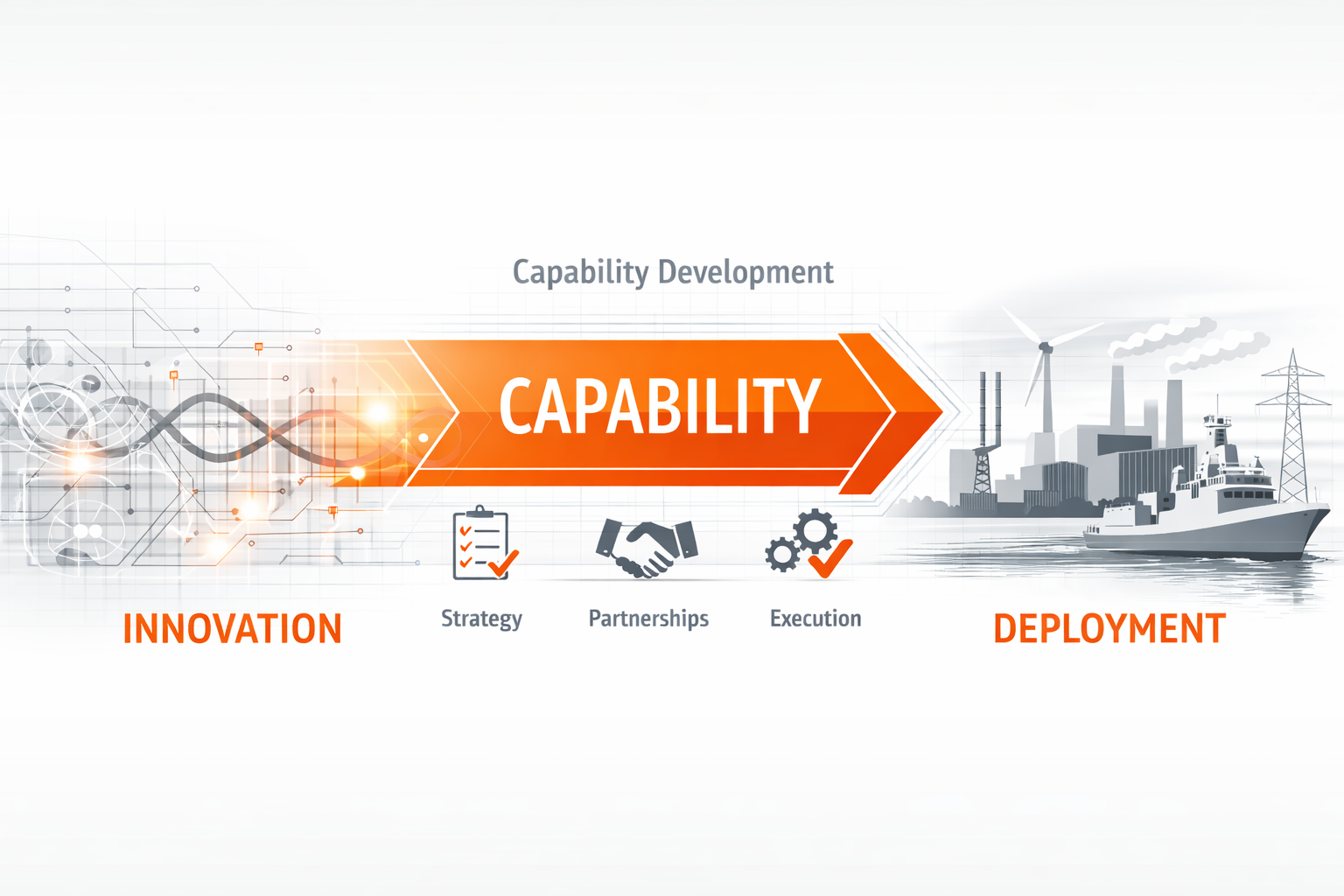
Concept → Demonstration → Operational Capability
What are CRC-P Grants?
CRC-P grants are Australian Government-funded programs that support collaborative, industry-led research projects aimed at solving real-world problems.
Key Features
- Funding: ~$100,000 to $3 million
- Duration: Up to 3 years
- Structure: Industry-led consortium
- Requirement: At least one research partner (e.g. university, CSIRO)
- Focus: Commercial outcomes, not pure research
The emphasis is clear:
This is not research for research’s sake — it is research to deliver capability.
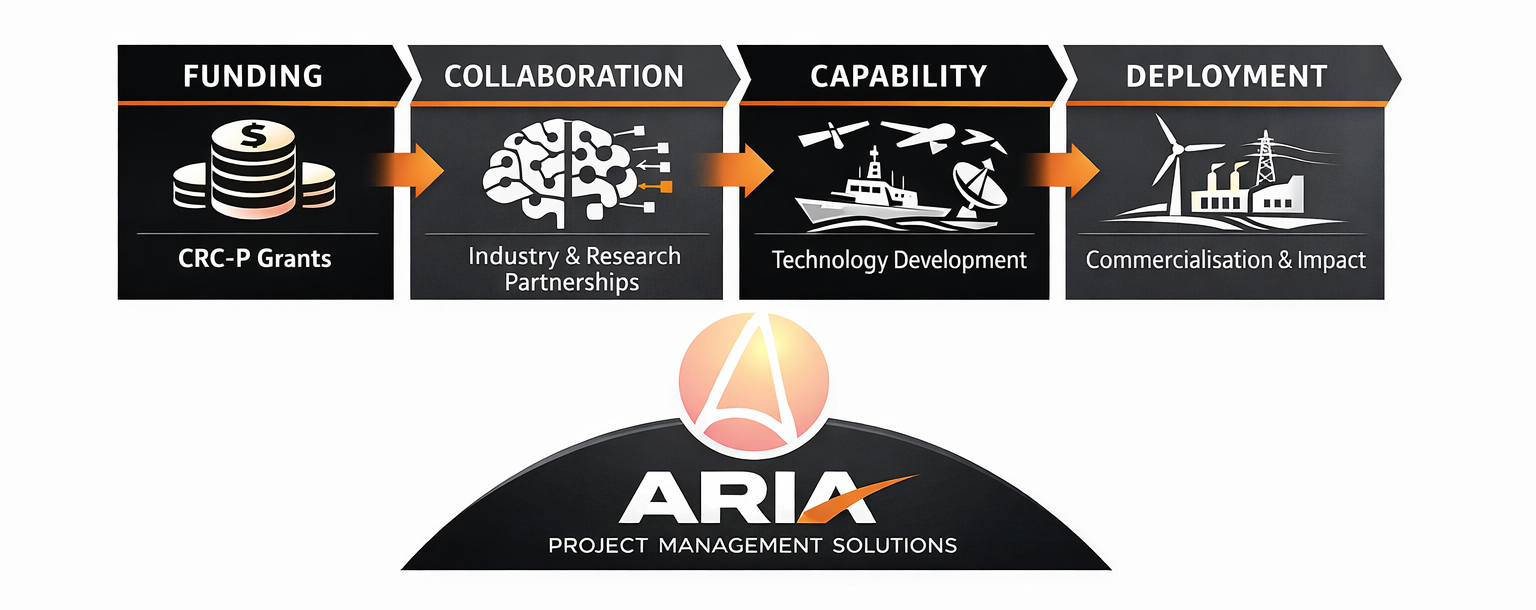
From Funding to Capability: How CRC-P Works in Practice
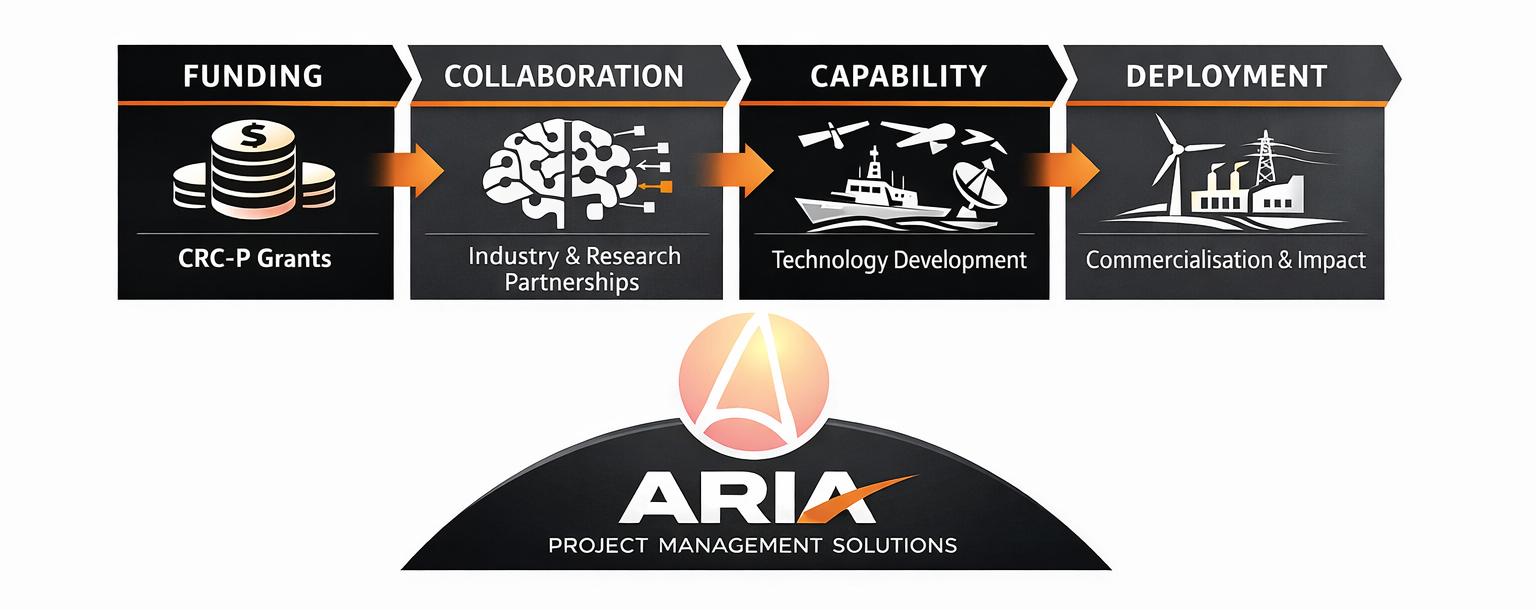
CRC-P is most effective when structured as a clear pathway from funding through to deployment.
The model below illustrates how industry-led innovation is translated into real-world capability
Why CRC-P Matters for Sovereign Capability
CRC-P aligns strongly with Australia’s national priorities and complements broader NSW innovation funding pathways, enabling organisations to move from concept to deployed capability, particularly in:
- Defence and national security
- Sovereign industrial capability
- Advanced manufacturing
- Energy transition and sustainability
- Digital and emerging technologies (AI, data, cyber)
For organisations working in these domains, CRC-P provides a structured pathway to:
- De-risk innovation
- Accelerate development timelines
- Align with government priorities
- Build long-term capability ecosystems
What a Successful CRC-P Project Looks Like
Winning CRC-P projects are not defined by technical brilliance alone — they are defined by clarity of outcome and pathway to impact.
A strong proposal answers four critical questions:
1. What is the industry problem?
- Clearly defined, validated, and significant
- Not hypothetical or research-driven
2. What is the solution?
- Practical, scalable, and achievable within 3 years
- Supported by both industry and research capability
3. Who will use it?
- Identified end-users (Defence, government, industry)
- Clear adoption pathway
4. What is the commercial outcome?
- Revenue, capability uplift, or operational advantage
- Defined post-project trajectory
Common Reasons CRC-P Applications Fail
Many CRC-P applications are unsuccessful due to avoidable issues:
- Too research-heavy (lack of commercial focus)
- Weak industry leadership
- No clear adoption pathway
- Unstructured collaboration
- Unrealistic delivery plans
In short:
Strong ideas fail without structured execution
Where CRC-P Creates the Most Value
CRC-P is particularly effective in projects that require:
- Technology Translation
Turning emerging technologies (AI, advanced materials, digital systems) into operational capability. This is particularly relevant for AI-enabled capability development, where emerging technologies must be rapidly translated into operational systems
- Demonstration Projects
Piloting new systems, platforms, or infrastructure before scale
- Capability Uplift
Enhancing existing systems with new technologies (e.g. sustainment, asset management, decision systems)
- Cross-Sector Collaboration
Bringing together Defence, industry, and research into a single delivery model
CRC-P in Practice: Typical Use Cases
CRC-P is well suited to initiatives such as:
- Additive manufacturing capability for Defence sustainment
- AI-enabled decision support systems
- Circular economy and waste-to-energy infrastructure
- Water security and distributed utility systems
- Smart asset management and digital engineering platforms
ARIA’s Role: CRC-P Program Structuring and Delivery Partner
At ARIA Project Management Solutions, we operate at the intersection of:
- Strategy
- Program design
- Delivery execution
We position ourselves as a:
CRC-P Program Structuring and Delivery Partner
What This Means in Practice
We support organisations across the full CRC-P lifecycle:
1. Opportunity Identification
- Aligning project concepts with CRC-P objectives
- Positioning against national priorities
- Defining the capability narrative
2. Consortium Structuring
- Identifying and aligning industry and research partners
- Establishing governance and delivery frameworks
- Ensuring roles are clear, complementary, and credible
3. Proposal Development
- Writing outcome-focused, high-impact submissions
- Structuring commercialisation pathways
- Aligning with assessment criteria
4. Program Design
- Developing executable delivery plans
- Defining milestones, risk frameworks, and reporting structures
- Ensuring alignment with funding requirements
5. Delivery and Execution
- Program and project management
- Stakeholder coordination (industry, research, government)
- Risk management aligned with ISO 31000 principles
Why ARIA
ARIA brings a unique combination of:
- Defence and sovereign capability experience
- Complex program delivery expertise
- Systems thinking and integration capability
- Commercial and strategic insight
We don’t just help secure funding — we ensure:
Funded projects are delivered successfully and generate real capability outcomes.
Integrating CRC-P Into Your Strategy
Organisations that succeed with CRC-P don’t treat it as a one-off grant.
They treat it as part of a broader strategy:
- Pipeline of innovation projects
- Structured industry–research partnerships
- Repeatable funding and delivery model
- Alignment with government priorities
This is where long-term value is created.
Start With the Right Project
The most important step is not writing the application.
It is defining the right project — one that:
- Solves a real problem
- Has committed stakeholders
- Can be delivered within timeframe
- Leads to tangible outcomes
Discuss Your CRC-P Project Concept
If you are considering a CRC-P application — or exploring how to structure an industry-led innovation program — ARIA can support you from concept through to delivery.
If you are exploring funding options or positioning a project within Australia’s innovation ecosystem, we can help align your concept with the right programs, including CRC-P and other national funding initiatives.