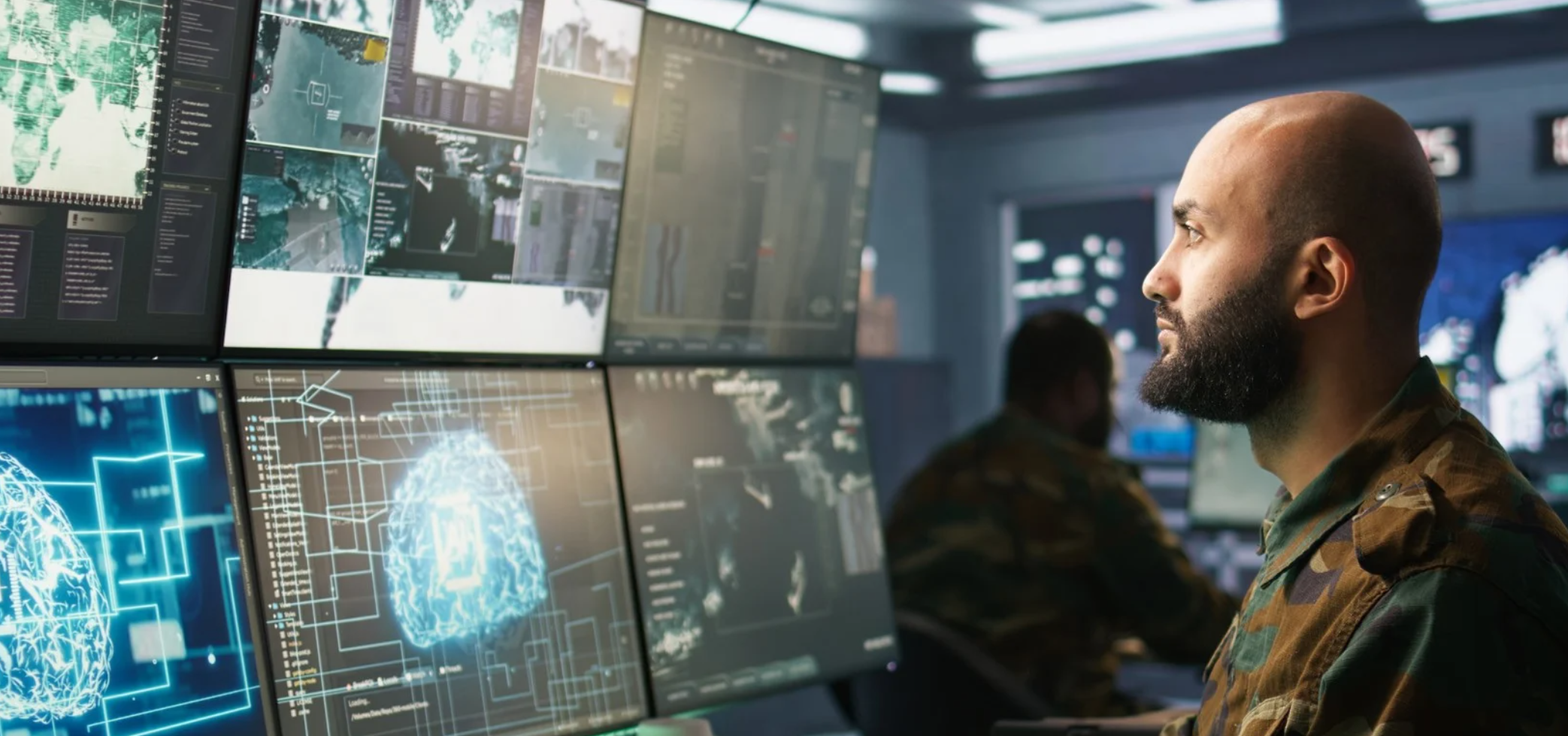
Artificial intelligence and advanced analytics are beginning to transform how complex maritime platforms are sustained. By shifting from reactive maintenance toward predictive, data-driven decision support, defence organisations can improve fleet availability, reduce lifecycle costs, and strengthen sovereign maritime capability.
Recent research initiatives exploring the application of artificial intelligence to naval sustainment illustrate how digital technologies can support engineering decision-making across complex defence platforms.
From Reactive Maintenance to Predictive Sustainment
Modern naval platforms are among the most complex engineered systems in operation today. A single vessel integrates propulsion, combat systems, sensors, communications networks, electrical distribution, and mission systems — all operating in demanding environments over service lives that often exceed three decades.
Traditional sustainment approaches rely on scheduled maintenance cycles, inspections, and engineering experience to identify potential issues. While these processes remain fundamental, they often detect degradation only after it has begun to affect system performance.
Artificial intelligence and machine learning provide an opportunity to augment these processes. By analysing large volumes of operational and engineering data, predictive models can identify patterns that signal potential equipment degradation before failures occur.
This enables sustainment teams to move toward a predictive maintenance model, where engineering decisions are supported by data-driven insight rather than solely by periodic inspection cycles.
Digital Technologies Transforming Naval Sustainment
Several digital technologies are now influencing how complex maritime platforms are sustained and maintained.
Artificial Intelligence and Machine Learning
Used to analyse engineering and operational data, these technologies can detect patterns associated with equipment degradation and operational risk.
Digital Twins
Virtual models of platforms or systems allow engineers to simulate performance, test maintenance strategies, and explore potential failure modes.
Integrated Data Environments
Modern sustainment environments increasingly integrate engineering data, maintenance records, logistics information, and operational reporting into unified data platforms.
Human–AI Teaming
Decision-support tools provide engineers and sustainment managers with insights that support informed judgement, rather than replacing human expertise.
Together, these capabilities support a transition toward data-informed sustainment strategies that improve operational readiness while managing lifecycle cost.
Collaboration Across Industry and Academia
Innovation in naval sustainment increasingly occurs through collaboration between industry, academia, and government organisations.
A recent initiative involving the University of Technology Sydney and Navantia Australia is exploring the application of artificial intelligence to support decision-making in naval sustainment environments. Industry reporting highlights how AI-enabled analytics could help engineering teams anticipate maintenance requirements and improve fleet availability.
ARIA Project Management Solutions Pty Ltd (“ARIA Solutions”) is proud to be supporting aspects of this broader innovation ecosystem. Through its work across maritime capability programs, systems engineering, and sustainment environments, ARIA Solutions contributes to the translation of emerging technologies into deployable, supportable capability outcomes.
ARIA Solutions’ role in such initiatives reflects its broader focus on bridging innovation, systems thinking, and disciplined delivery in complex environments.
Strengthening Australia’s Maritime Capability
Australia’s maritime capability programs represent long-term national investments, with many platforms expected to remain in service for several decades.
Ensuring these platforms remain operationally available requires not only robust engineering practices, but also the ability to integrate emerging technologies that enhance sustainment effectiveness.
Predictive analytics, digital engineering environments, and AI-enabled decision support have the potential to strengthen sustainment outcomes by:
- improving fleet availability
- reducing unplanned maintenance
- supporting engineering decision-making
- improving lifecycle cost management
As these technologies mature, they are likely to become an increasingly important component of Australia’s sovereign maritime capability ecosystem.
Further Reading
- Responsible AI in Defence: From Policy to Capability Delivery
- UTS – AI research charts a new course for naval technology
- Australian Defence Magazine – UTS wins Defence AI contract
- APDR – AI research charts new course for naval technology
About ARIA
ARIA Project Management Solutions Pty Ltd (“ARIA Solutions”) supports government, defence, industry, and research partners in the delivery of complex programs across maritime capability, infrastructure, and strategic technology sectors.
ARIA Solutions specialises in program leadership, systems thinking, sustainment strategy, and innovation translation — helping organisations move from concept to deployable, supportable capability in complex and regulated environments.

Leave a Reply